

Grid-tie inverter
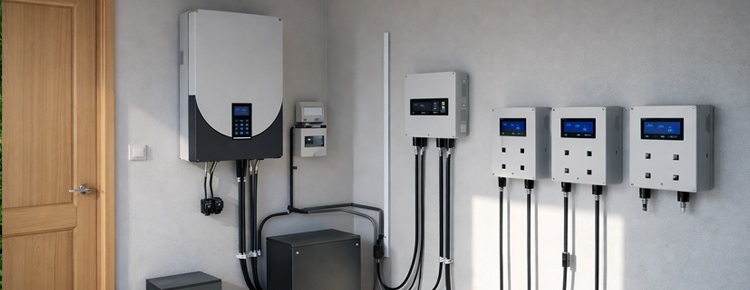
Grid-tie inverter
Grid-tie inverter is a special type of solar inverter designed for operation in systems connected to the utility grid (main electrical network).
What is a grid-tie inverter?
A grid-tie inverter converts the direct current (DC) generated by solar panels into alternating current (AC) with parameters that fully match the requirements of the utility grid (voltage 220/380 V, frequency 50 Hz, synchronized phase, and pure sine wave form).
It synchronizes with the grid and allows:
- Prioritizing home power supply from solar energy.
- Feeding excess generated energy back into the grid (via net metering, «green» tariff, or net billing).
Key Features and Operating Principle
- Operates only when grid voltage is present — this is a mandatory safety requirement (anti-islanding protection): if the grid fails, the inverter automatically shuts down immediately to prevent feeding power into a de-energized grid and endangering utility repair crews.
- Does not support batteries (a pure grid-tie inverter has no battery connection) — all generated energy is either consumed instantly by the household loads or exported to the grid.
- Uses MPPT trackers to achieve maximum power output from the solar panels under varying conditions.
- Includes built-in protection systems against: overvoltage, short circuits, reverse polarity, and other electrical faults.
Advantages of a Grid-Tie Inverter
- The most affordable option among solar inverters (no battery charging/discharging circuitry or related components);
- High efficiency (typically 97–99%);
- Simple installation and minimal maintenance requirements;
- Fast payback period (often 4–7 years) when excess energy is sold at favorable rates or credited against utility bills;
- No energy losses associated with battery charging and discharging cycles.
When to choose a grid-tie inverter?
- If you have a stable electrical grid with rare or no frequent outages.
- Your main goal is maximum savings on electricity bills and/or selling excess energy.
- You have no desire or budget to install expensive batteries.
- For commercial facilities where generated energy is sold at a favorable tariff.
If you need model recommendations, a comparison with hybrid inverters, or help selecting one based on your power requirements — write or call us, we will consult you and select the best option for your needs.
Our Services
- Installation of Grid-Tie Inverter
- Configuration of Grid-Tie Inverter
- Diagnostics of Grid-Tie Inverter
Request Servise
Contact us by calling or submitting a request online.
And we will get back to you as soon as possible
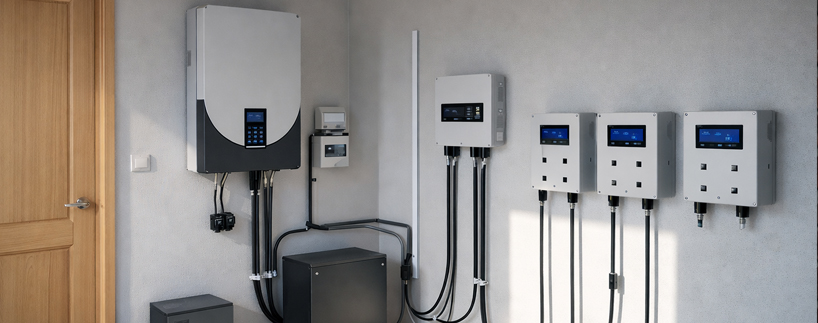
Grid-tie inverter
Grid-tie inverter is a special type of solar inverter designed for operation in systems connected to the utility grid (main electrical network).
What is a grid-tie inverter?
A grid-tie inverter converts the direct current (DC) generated by solar panels into alternating current (AC) with parameters that fully match the requirements of the utility grid (voltage 220/380 V, frequency 50 Hz, synchronized phase, and pure sine wave form).
It synchronizes with the grid and allows:
- Prioritizing home power supply from solar energy.
- Feeding excess generated energy back into the grid (via net metering, «green» tariff, or net billing).
Key Features and Operating Principle
- Operates only when grid voltage is present — this is a mandatory safety requirement (anti-islanding protection): if the grid fails, the inverter automatically shuts down immediately to prevent feeding power into a de-energized grid and endangering utility repair crews.
- Does not support batteries (a pure grid-tie inverter has no battery connection) — all generated energy is either consumed instantly by the household loads or exported to the grid.
- Uses MPPT trackers to achieve maximum power output from the solar panels under varying conditions.
- Includes built-in protection systems against: overvoltage, short circuits, reverse polarity, and other electrical faults.
Advantages of a Grid-Tie Inverter
- The most affordable option among solar inverters (no battery charging/discharging circuitry or related components);
- High efficiency (typically 97–99%);
- Simple installation and minimal maintenance requirements;
- Fast payback period (often 4–7 years) when excess energy is sold at favorable rates or credited against utility bills;
- No energy losses associated with battery charging and discharging cycles.
When to choose a grid-tie inverter?
- If you have a stable electrical grid with rare or no frequent outages.
- Your main goal is maximum savings on electricity bills and/or selling excess energy.
- You have no desire or budget to install expensive batteries.
- For commercial facilities where generated energy is sold at a favorable tariff.
If you need model recommendations, a comparison with hybrid inverters, or help selecting one based on your power requirements — write or call us, we will consult you and select the best option for your needs.
Request Servise
Contact us by calling or submitting a request online. And we will get back to you as soon as possible
Our Services
- Installation of Grid-Tie Inverter
- Configuration of Grid-Tie Inverter
- Diagnostics of Grid-Tie Inverter